The short answer: knowing how to fix a leaning fence starts with the post. Most fences lean because a post has moved or failed. In North Texas the usual causes are clay soil that swells and shrinks, posts that weren’t set deep or set in concrete, rot at the ground line, wind and storm damage, and sagging gates. The lasting fix is to straighten the fence and reset or replace the failed posts, not just prop the fence up.
Key takeaways
- A leaning fence is almost always a post problem, not a board problem.
- Blackland Prairie clay is a major cause of leaning fences in Rockwall and Collin counties.
- Braces and stakes can be a short-term fix; resetting the post is the lasting one.
- Fix leaning early. One leaning post pulls its neighbors with it.
- If several posts are failing, it may be time to compare repair with replacement.
Table of Contents
- 5 reasons fences lean in North Texas
- How to tell what’s wrong
- How to fix a leaning fence
- How to keep your fence from leaning again
- What about a leaning iron fence?
- When to call a fence repair pro
- FAQ
5 Reasons Fences Lean in North Texas
1. Clay soil that swells and shrinks
Much of Rockwall County and Collin County sits on Blackland Prairie clay. It swells when it’s wet and shrinks and cracks when it’s dry. Season after season, that movement pushes and pulls on fence posts until they loosen and tilt. It’s the number-one reason fences lean in this area.
2. Posts that weren’t set deep enough or set in concrete
Posts that are too shallow, or set without enough concrete around them, don’t have the grip to resist soil movement and wind. They often look fine for the first few years, then start to lean.
3. Rot at the ground line
Wood posts are most vulnerable right where they meet the soil, where moisture sits the longest. Once the post rots there, it can snap or bend even if the concrete is still solid. Sprinklers aimed at the fence and soil piled against the boards speed this up.
4. Wind and storm damage
North Texas storms bring strong gusts that push hard on solid privacy fences. A fence that was already slightly loose can lean or blow over in a single storm. Falling limbs can also break posts and rails.
5. Sagging gates and extra weight
A heavy gate that sags puts constant strain on its post. So do vines, climbing plants and anything hung on the fence. Over time that extra load can pull the post out of line.

How to Tell What’s Wrong
A quick inspection tells you a lot about what’s needed:
- Push on the leaning section. If the post rocks in the ground, the footing has loosened. If the post bends or feels spongy near the ground, it may be rotted.
- Look at the base. Check for cracked concrete, a gap between the post and the soil, or a post that has broken off below the surface.
- Check the rails. Rails pulling away from a post can make a fence sag even when the post is solid.
- Count the problem posts. One or two leaning posts is a repair. Many failing posts can point toward replacement.
If you’re unsure, a fence pro can tell you quickly. Easton offers free on-site estimates.
How to Fix a Leaning Fence
The right fix depends on what failed. Here are the common approaches, from quickest to most permanent:
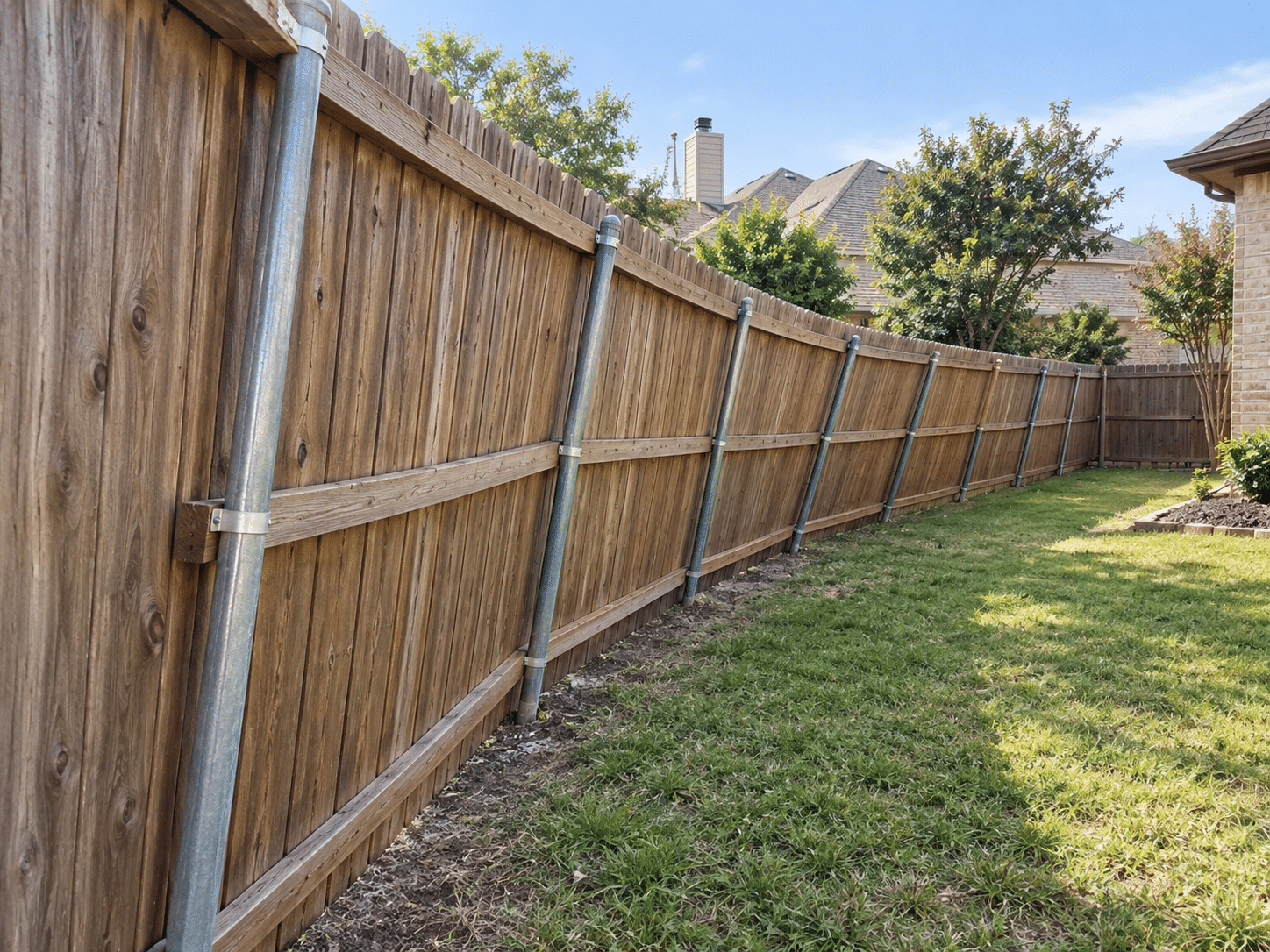
- Temporary bracing: a brace or stake can hold a fence upright after a storm, but it doesn’t fix the cause. Think of it as first aid.
- Reinforcing a solid post: if the post itself is sound but loose in the ground, it can sometimes be straightened and reinforced.
- Resetting the post: the fence is braced, the post is straightened and set firmly in new concrete so it stops moving.
- Replacing the post: rotted or broken posts are removed, along with their old footings, and new posts are set in concrete. The rails and boards are then reattached.
- Repairing the gate: if a sagging gate caused the lean, the gate, hinges and post are fixed together.
If you try a fix yourself, always have underground utility lines marked before digging through Texas 811, and never dig near buried lines. For anything beyond a simple brace, a professional repair usually lasts longer because it addresses the cause.
Why fixing the cause matters: if a leaning fence is simply pushed back and braced, the same post usually leans again after the next wet season or storm. A lasting repair answers the question of why the post moved in the first place, whether that was clay soil, a shallow footing, rot or a sagging gate, and fixes that problem directly.
Why fixing the cause matters: if a leaning fence is simply pushed back and braced, the same post usually leans again after the next wet season or storm. A lasting repair answers the question of why the post moved in the first place, whether that was clay soil, a shallow footing, rot or a sagging gate, and fixes that problem directly.
How to Keep Your Fence From Leaning Again
- Keep water away from posts. Aim sprinklers away from the fence and keep soil and mulch off the bottom of the boards.
- Fix problems early. A slightly leaning post is much easier to correct than a fallen section.
- Keep gates adjusted. Tighten hinges and fix sagging gates before they pull on their posts.
- Trim plants and vines so they don’t add weight or trap moisture.
- Protect the wood. Staining and sealing slow moisture damage. See our wood fence maintenance guide.
- Build it right the first time. When a new fence is installed, posts set properly in concrete are what keep it straight in clay soil.
What About a Leaning Iron Fence?
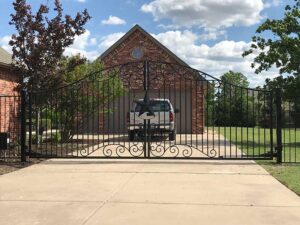
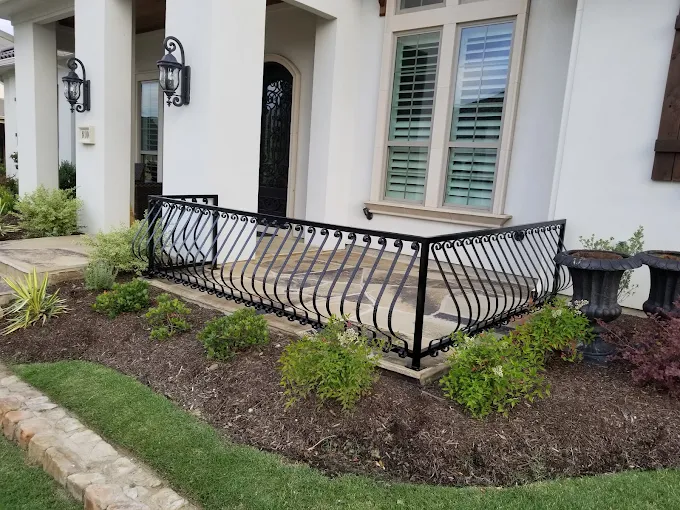
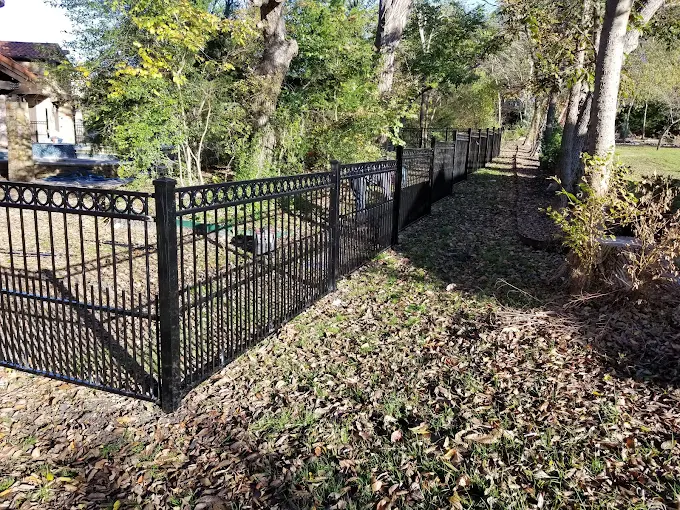
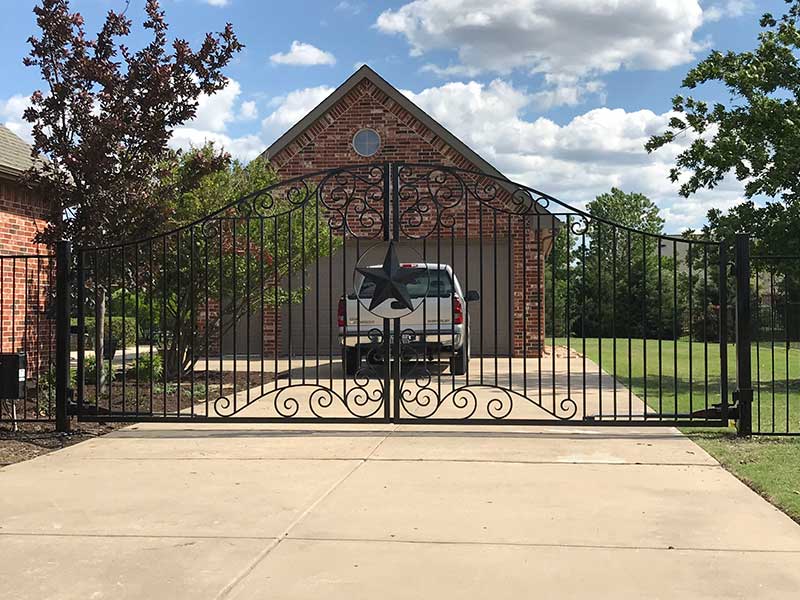
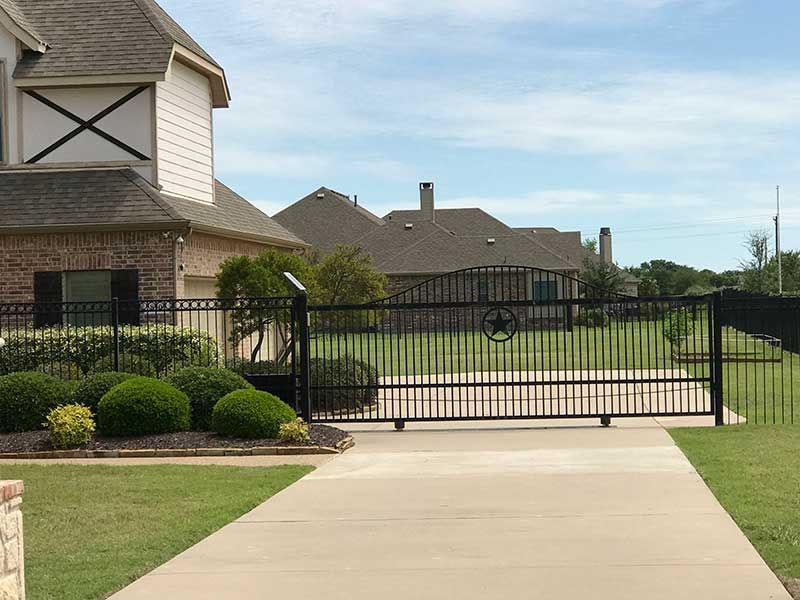
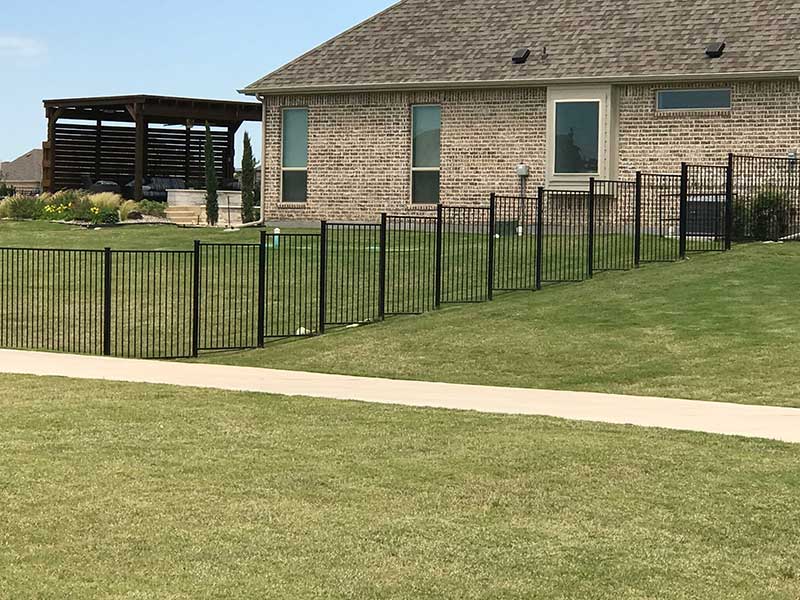
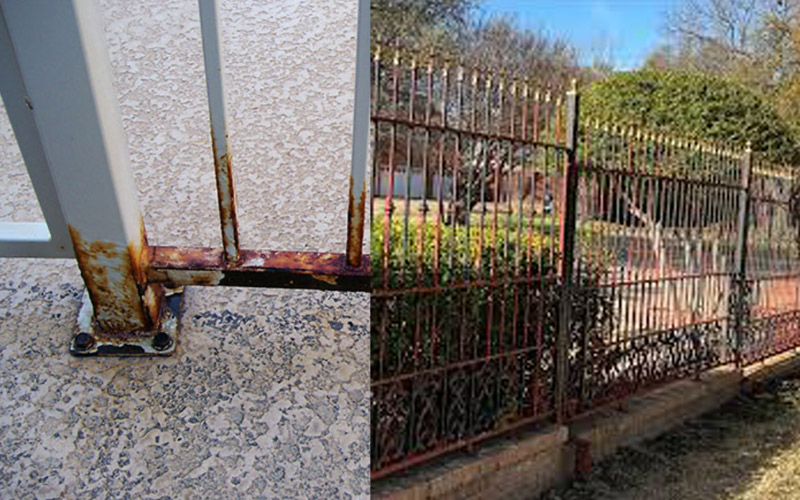
Wrought iron and steel fences can lean too, usually for the same reason as wood: the posts have moved in the soil. Clay movement, a vehicle or mower bumping a post, or a heavy gate pulling on its post can all tip an iron fence out of line. Rust where the post meets the ground or the concrete can also weaken it over time.
The fix follows the same idea. The leaning section is supported, the post is straightened or replaced and set firmly in concrete, and any damaged panels are repaired or refinished. Because iron panels are rigid, one leaning post can pull a whole panel out of square, so it pays to fix it early. Learn more in our iron fence repair guide.
When to Call a Fence Repair Pro
Call a professional when:
- More than one post is leaning or rocking
- A post is rotted or broken at or below the ground
- A storm knocked down or damaged a section
- A gate is dragging, sagging or won’t latch
- The fence keeps leaning after a DIY fix
Easton Fencing repairs wood, cedar and wrought iron fences across Rockwall County and Collin County, regardless of who built them. Our in-house crews reset and replace posts, rebuild damaged sections and fix gates, fully insured and with free estimates. Learn more about our fence repair service and gate repair service. Iron fence leaning or rusting? See our iron fence repair guide.
If the fence is near the end of its life, we’ll tell you honestly whether a new cedar fence or wrought iron fence makes more sense. Request a free estimate.
We repair fences in Rockwall, Heath, Fate, Royse City, Parker, Lucas, Fairview, Allen, Plano, McKinney, Prosper, Celina, Anna, Wylie and Sachse.
FAQ
What should I do if my fence is leaning?
Brace it so it doesn’t fall further, then find the cause. Check whether the post is loose in the ground, rotted at the base or broken. One or two problem posts can usually be reset or replaced; several failing posts may mean it’s time to consider replacement.
How do I repair a broken fence post?
A broken or rotted post is usually replaced. The fence is braced, the old post and footing are removed, a new post is set in concrete, and the rails and boards are reattached. It’s a job many homeowners leave to a pro because it involves digging and heavy lifting.
My fence post is set in concrete but still wobbly. How can I fix it?
The concrete footing may have cracked or loosened in the soil, or the post may be rotting inside it. If the post is solid, it can sometimes be reinforced or reset. If it’s rotted, it should be replaced with a new post set in fresh concrete.
How do I stop my fence from swaying in the wind?
Swaying usually means loose posts or rails. Tighten or replace loose rail fasteners, reset any posts that move, and fix sagging gates. Solid privacy fences catch the most wind, so posts set firmly in concrete matter most.
Can you fix a leaning fence post without concrete?
Braces and stakes can hold a post temporarily without new concrete, but they don’t fix the cause. For a lasting repair in North Texas clay soil, the post is usually reset or replaced in concrete.
Should I repair or replace my leaning fence?
Repair makes sense when only a few posts or sections are failing and the rest of the fence is solid. Replacement is often the better value when many posts are rotted or leaning. A free on-site estimate will tell you which makes more sense.