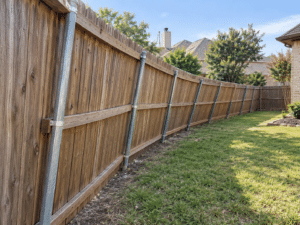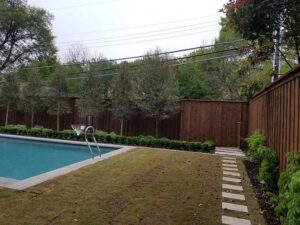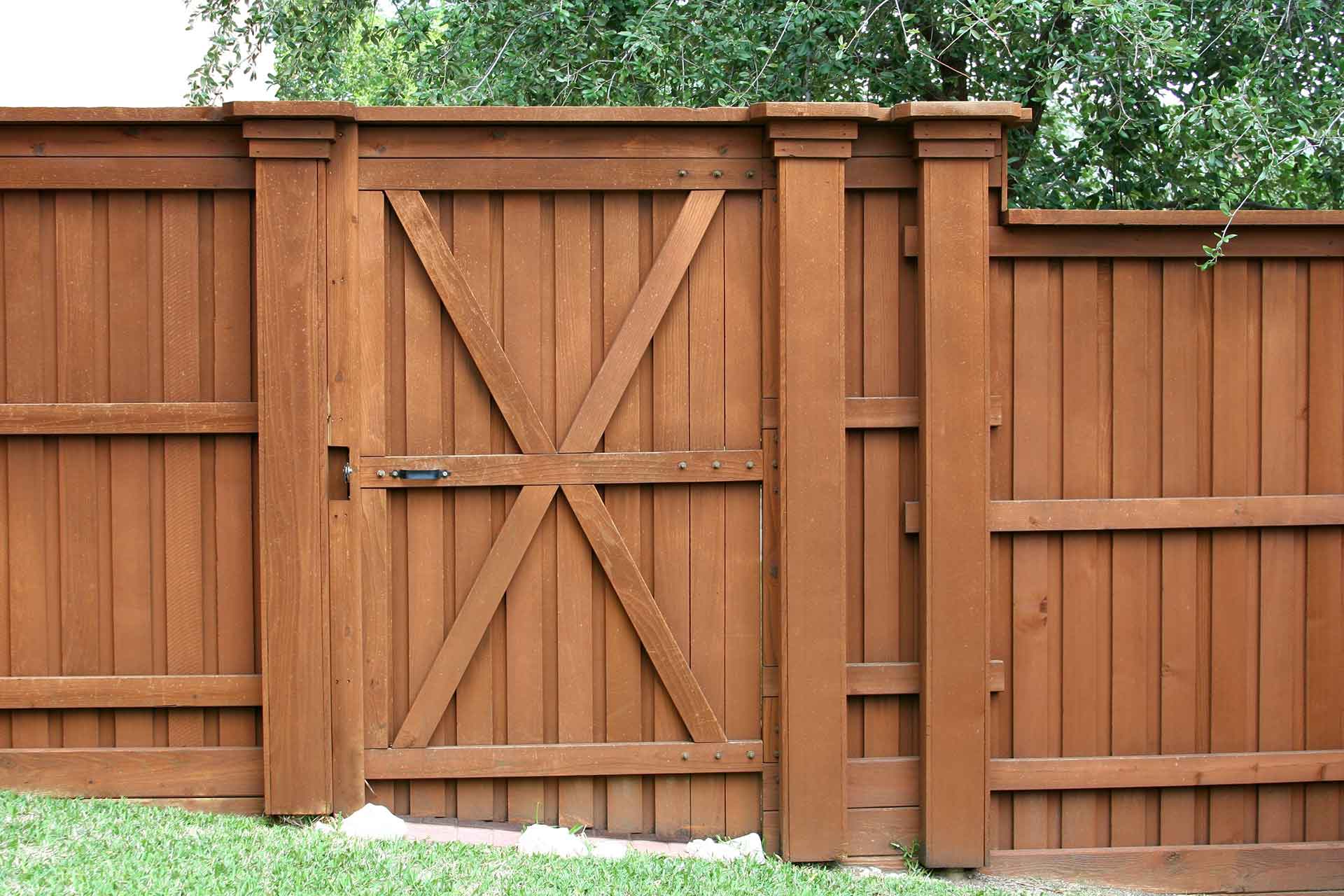

The short answer: good wood fence maintenance in North Texas means you inspect the fence twice a year, clean it gently, keep it stained or sealed, keep water and plants off the boards, and fix leaning posts and loose boards early. Cedar holds up well to Texas weather, but sun, wind and shifting clay soil wear down any fence that’s ignored.
Key takeaways
- Walk your fence line every spring and fall.
- Clean with low pressure or a garden hose. High pressure can damage cedar.
- Stain or seal to block sun and moisture, and re-coat when the color fades or water stops beading.
- Keep sprinklers, soil and vines off the boards.
- A leaning post is the early warning sign of a bigger repair. Fix it fast.

Table of Contents
- Why wood fence maintenance matters in North Texas
- 7 steps to maintain a wood fence
- Seasonal wood fence maintenance checklist
- Choosing a fence stain color
- Signs your wood fence needs attention now
- When maintenance isn’t enough
- FAQ
Why Wood Fence Maintenance Matters in North Texas
North Texas is tough on wood. Long, hot summers dry out boards and fade their color. Spring storms bring strong wind and heavy rain. And the Blackland Prairie clay under most of Rockwall County and Collin County swells when it’s wet and shrinks when it’s dry, which works fence posts loose over time.
Cedar is the most popular fence wood here because it naturally resists rot and insects. But even cedar grays, checks and loosens without basic care. A little maintenance each year keeps your fence straight, protects your investment and helps it look good much longer.
7 Steps to Maintain a Wood Fence
1. Inspect the fence twice a year
Walk the full fence line in spring and fall. Push gently on each section and look for:
- Leaning or wobbly posts
- Loose, cracked or missing boards
- Popped nails or screws
- Soft spots or dark areas near the ground, which can signal rot
- Gates that sag, drag or don’t latch
Catching small problems early is the easiest way to avoid a big repair later.
2. Clean it gently
Dirt, mildew and pollen build up on wood and hold moisture against it. Rinse the fence with a garden hose and a soft brush, using a mild cleaner made for exterior wood if needed. If you use a pressure washer, keep it on a low setting and hold the tip well away from the boards. Too much pressure can tear up the soft cedar surface.
3. Stain or seal to protect against sun and moisture
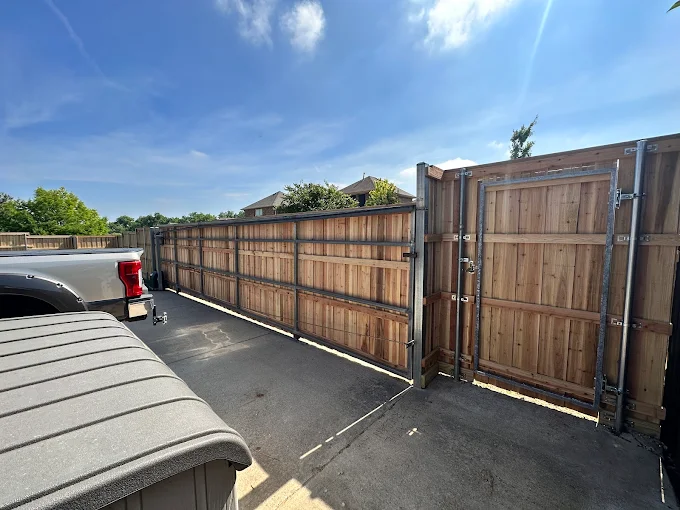
A quality exterior stain or sealer is the most important part of wood fence maintenance and the best protection you can give a cedar fence. The Western Red Cedar Lumber Association also has a helpful overview of cedar care. It blocks UV rays that turn cedar gray and slows moisture from soaking in. Let the fence dry fully before staining, and apply on a mild, dry day out of direct midday sun.
When to re-coat: when the color has clearly faded or water no longer beads on the surface. How often depends on the product and how much sun your fence gets; south- and west-facing fences usually need it sooner.
4. Keep water off the boards
Constant moisture is what rots wood. Aim sprinklers away from the fence, make sure gutters and downspouts don’t dump water against it, and keep soil and mulch from piling up against the bottom of the boards.
5. Trim plants and vines
Vines, shrubs and climbing plants trap moisture and can pull boards loose. Keep plants trimmed back so air can move along both sides of the fence.
6. Tighten and replace hardware
Re-secure loose boards, replace popped nails with exterior screws, and tighten gate hinges and latches. A gate that sags puts extra strain on its post, so fix it before it gets worse.
7. Fix leaning posts and damaged sections early
A post that starts to lean will keep leaning, and it pulls the rails and boards with it. In North Texas clay, the fix is usually resetting or replacing the post in concrete. Our guide Why Is My Fence Leaning? explains the causes and fixes, or our fence repair team can take care of it for you.
Seasonal Wood Fence Maintenance Checklist
- Spring: walk the fence after winter and early storms; clean off pollen and mildew; plan staining if the color has faded.
- Summer: keep sprinklers off the fence; watch for boards drying and pulling loose in the heat.
- Fall: a mild, dry season that’s often a good time to stain; trim back plants before winter.
- Winter: check for damage after freezes and storms; make sure gates still swing and latch.
- After any big storm: look for leaning sections, broken boards and damage from fallen limbs.
A simple yearly routine: walk the fence each spring, rinse it, fix anything loose, and check whether water still beads on the boards. If it doesn’t, plan to stain before the hottest part of summer or in the mild fall weather. That one routine covers most of what a cedar fence needs to stay strong and good-looking for years.
Choosing a Fence Stain Color
Fence stain comes in clear and transparent finishes that show the cedar grain, semi-transparent finishes that add color while letting the grain show through, and solid finishes that look more like paint. Popular choices in North Texas include:
- Natural cedar tones: keep the warm, fresh-cut look.
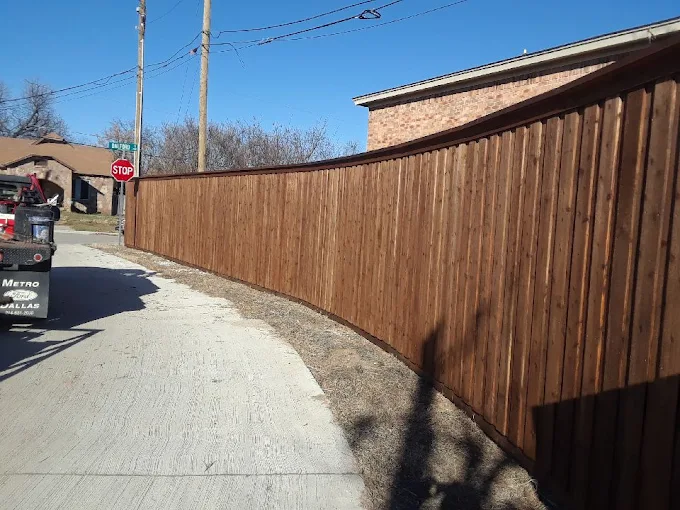
- Medium browns: rich and traditional, and they hide weathering well.
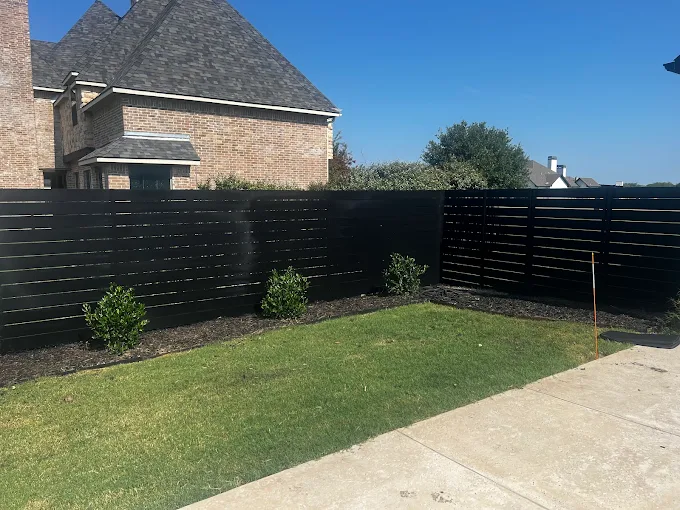
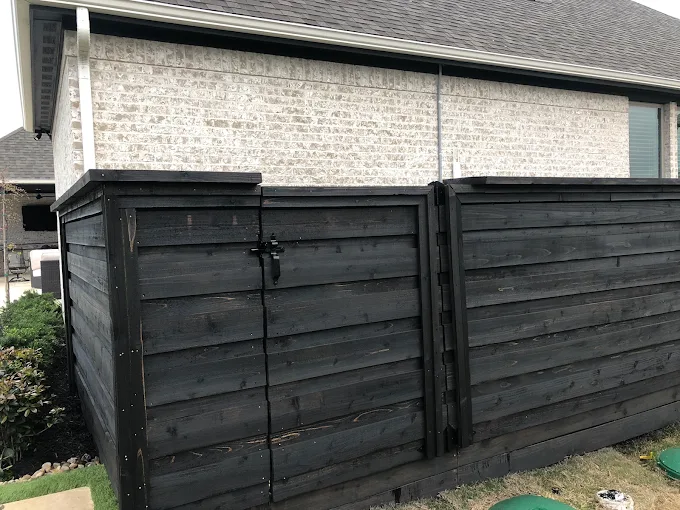
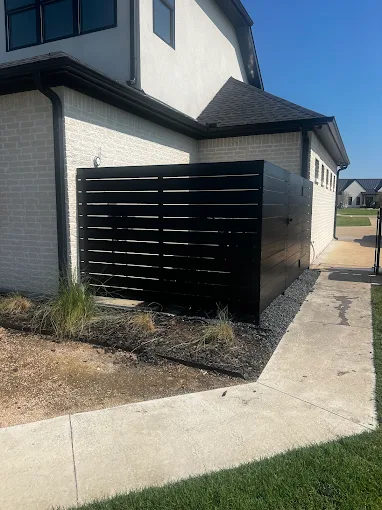
- Dark browns and grays: modern and dramatic, great with horizontal fences.
Before you choose, check your HOA guidelines, since many neighborhoods limit fence colors. Test a sample on a small area first, because color looks different on aged cedar than on new wood.

Signs Your Wood Fence Needs Attention Now
Some problems can wait for your next seasonal check. Others are worth handling right away, before they spread to the rest of the fence:
- A post that moves when you push it. Loose posts get worse with every wet and dry cycle.
- Boards that are soft, dark or crumbling near the ground. These are early signs of rot.
- Gaps opening between boards on a privacy fence that used to be solid.
- A gate that drags or won’t latch, which usually means its post is moving.
- Gray, splintering wood that no longer beads water, a sign the finish has worn away.
Catching these early is the heart of good wood fence maintenance. A quick fix today is almost always easier than rebuilding a section later.
When Maintenance Isn’t Enough
Maintenance extends a fence’s life, but it can’t fix structural failure. It may be time for repair or replacement when:
- Several posts are leaning or rotted at the ground
- Boards are rotting through, not just weathered
- Whole sections were damaged in a storm
- Repairs keep coming back in the same spots
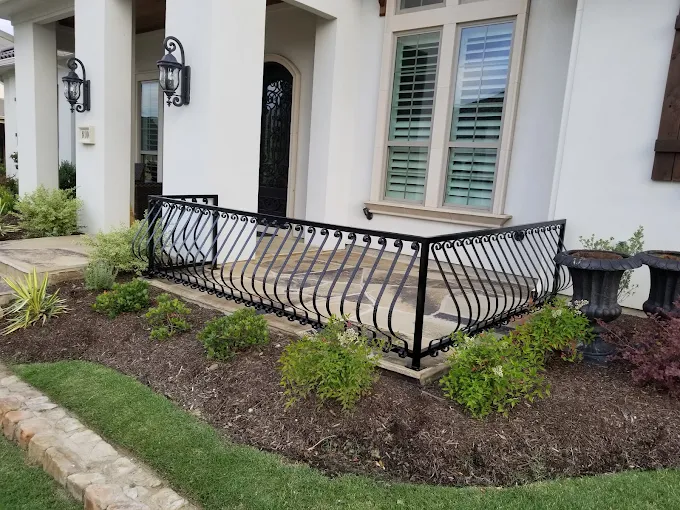
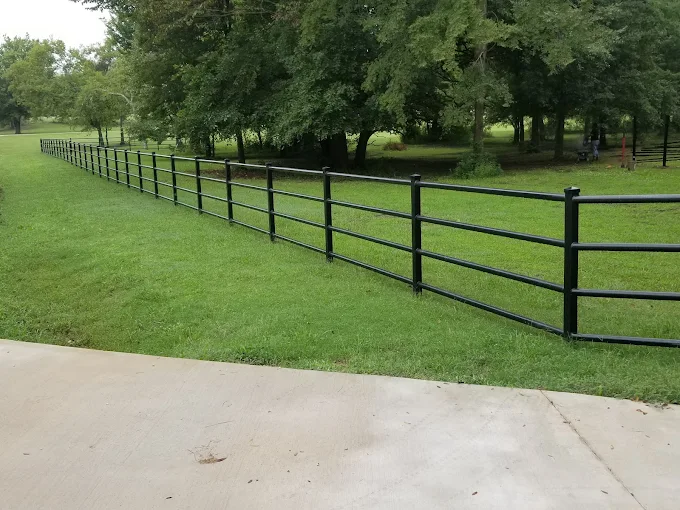
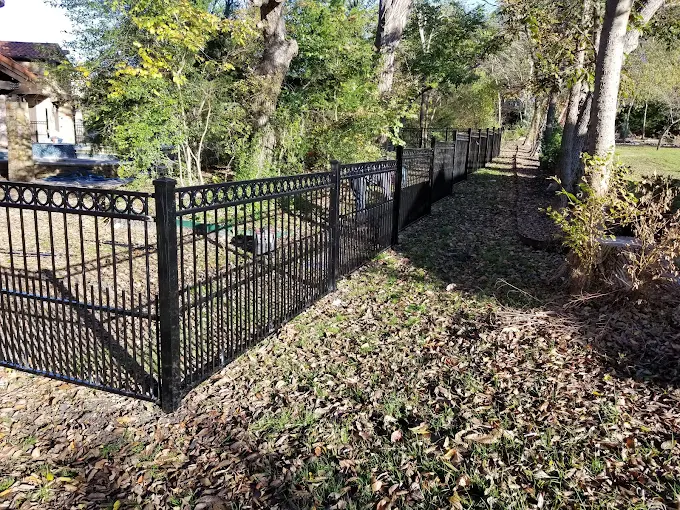
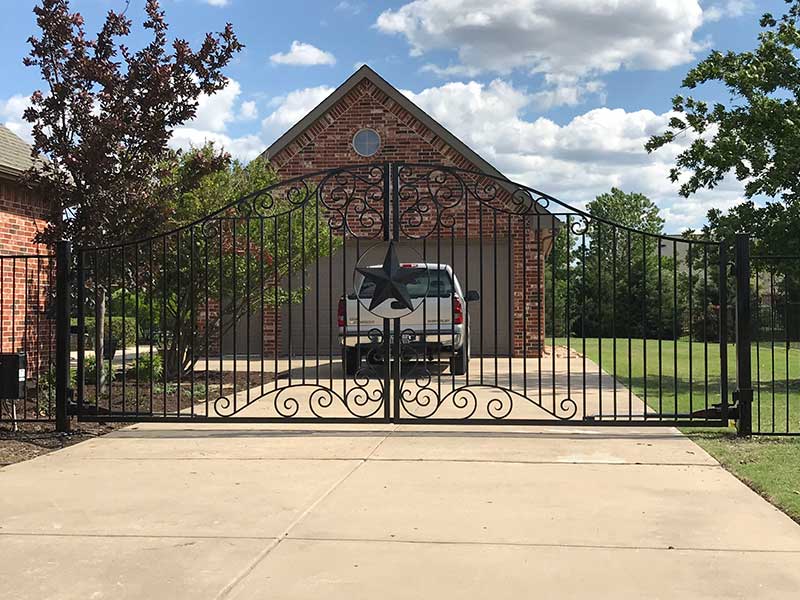
If damage is limited to a few posts or sections, a repair is usually the better value. If most of the fence is failing, a new cedar fence may make more sense. Some homeowners switch to wrought iron for lower upkeep; compare the two in cedar vs. iron fences.
Need Help With Your Fence?
Easton Fencing has built and repaired wood fences across Rockwall County and Collin County since 2009. Our in-house crews handle fence repair and full replacements, fully insured and with fast, free quotes. Request a free estimate or explore our guide to cedar privacy fence styles.
FAQ
Should you power wash a wooden fence?
You can, but carefully. Use a low pressure setting and keep the tip well away from the boards, because high pressure can tear up the soft surface of cedar. A garden hose, a soft brush and a mild exterior wood cleaner are often enough.
Do I need to treat my wood fence?
Yes, it’s strongly recommended. A quality exterior stain or sealer protects cedar from sun and moisture, slows graying and helps the fence last longer.
How often should I stain my fence?
Re-stain when the color has clearly faded or water no longer beads on the surface. How often depends on the product and how much sun the fence gets. Fences facing south and west usually need it sooner.
How long does a cedar fence last?
A well-built cedar fence lasts many years. Its lifespan depends most on how well the posts were set, how much sun and water it gets, and how regularly it’s stained or sealed.
How can I make an old wood fence look new?
Clean it gently, let it dry fully, replace any damaged boards, then apply a fresh coat of stain. A semi-transparent or solid stain can even out weathered color. If posts are leaning, fix them first so the fence looks straight again.
What is the best time of year to stain a fence in North Texas?
Mild, dry weather is best, which often means fall or spring. Avoid staining in extreme heat, direct midday sun or right before rain, and make sure the wood is fully dry first.