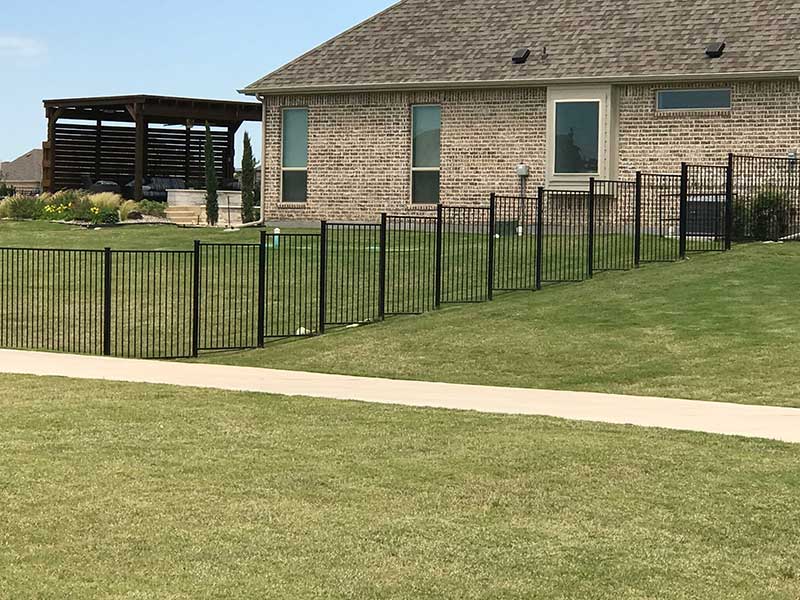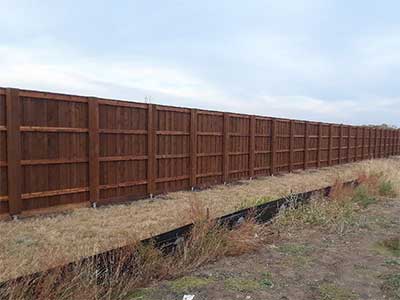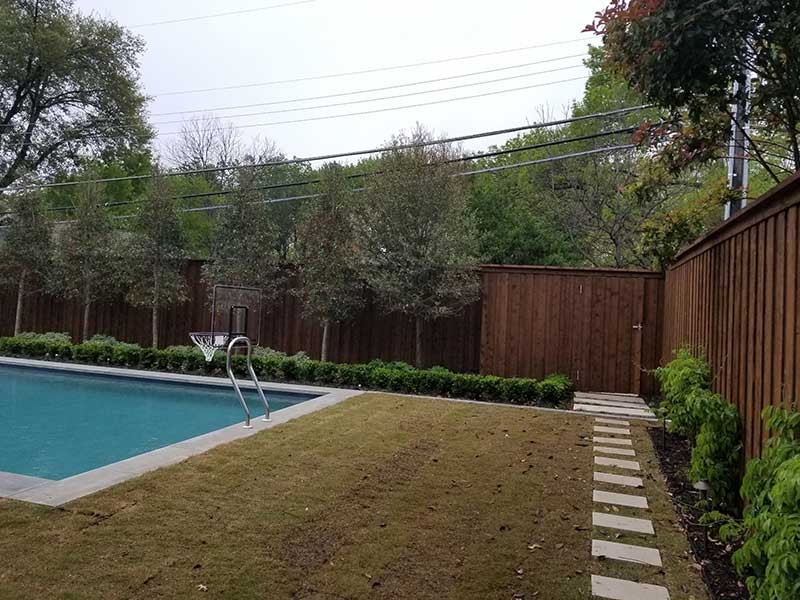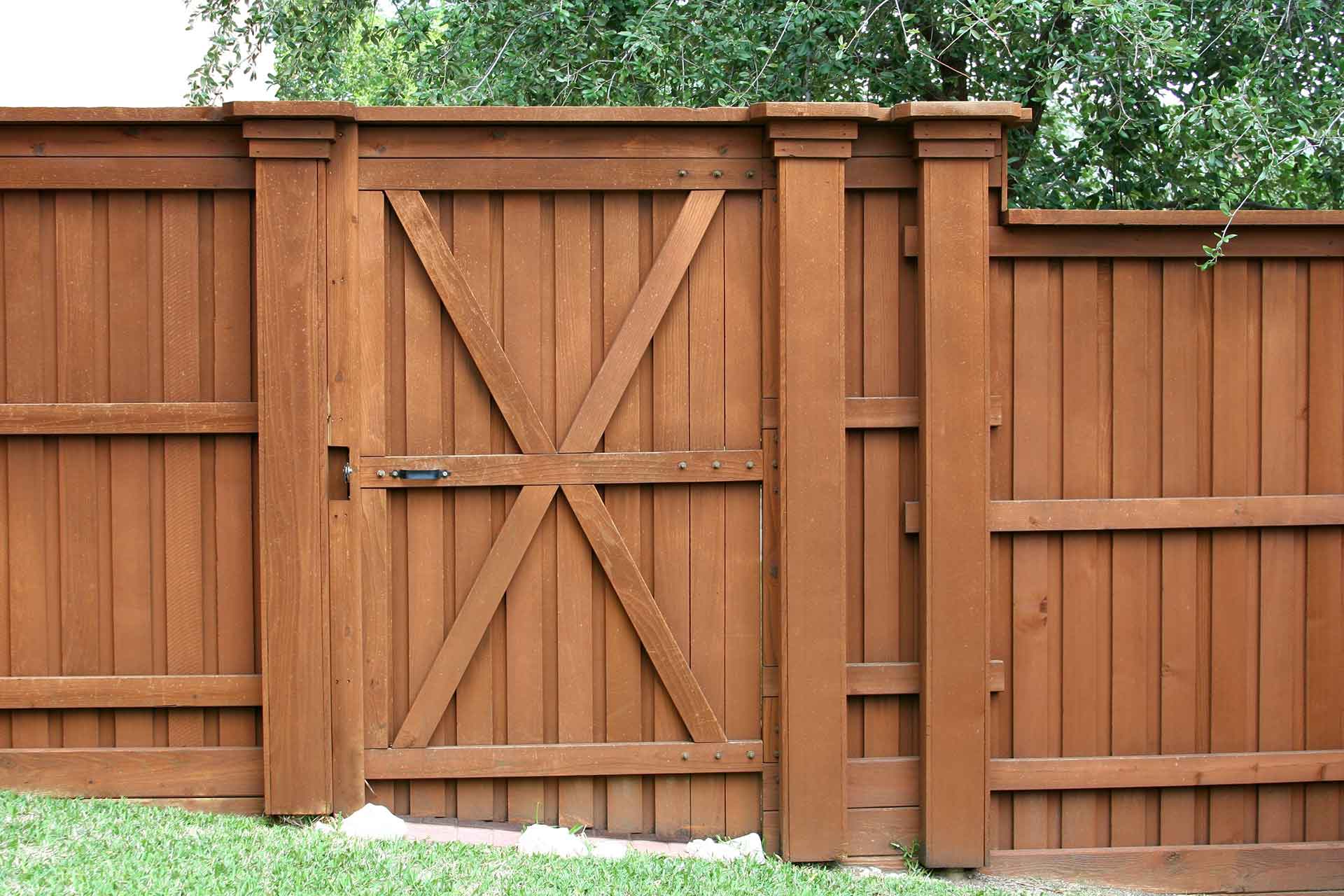

The short answer: a board-on-board fence gives the most complete privacy, side-by-side is the classic budget-friendly backyard fence, shadowbox looks finished from both sides and lets air through, and horizontal gives a modern look. All four can be built in cedar, and all four last longest when the posts are set right for North Texas clay soil. Here’s how to choose.
Key takeaways
- Most privacy: board-on-board. Overlapping boards leave no gaps, even as cedar dries and shrinks.
- Classic and simple: side-by-side. The standard North Texas backyard fence.
- Good-neighbor fence: shadowbox. Looks the same from both sides and handles wind well.
- Modern look: horizontal. Clean lines that suit contemporary homes.
- What matters most: post setting. Every style fails early if the posts move.
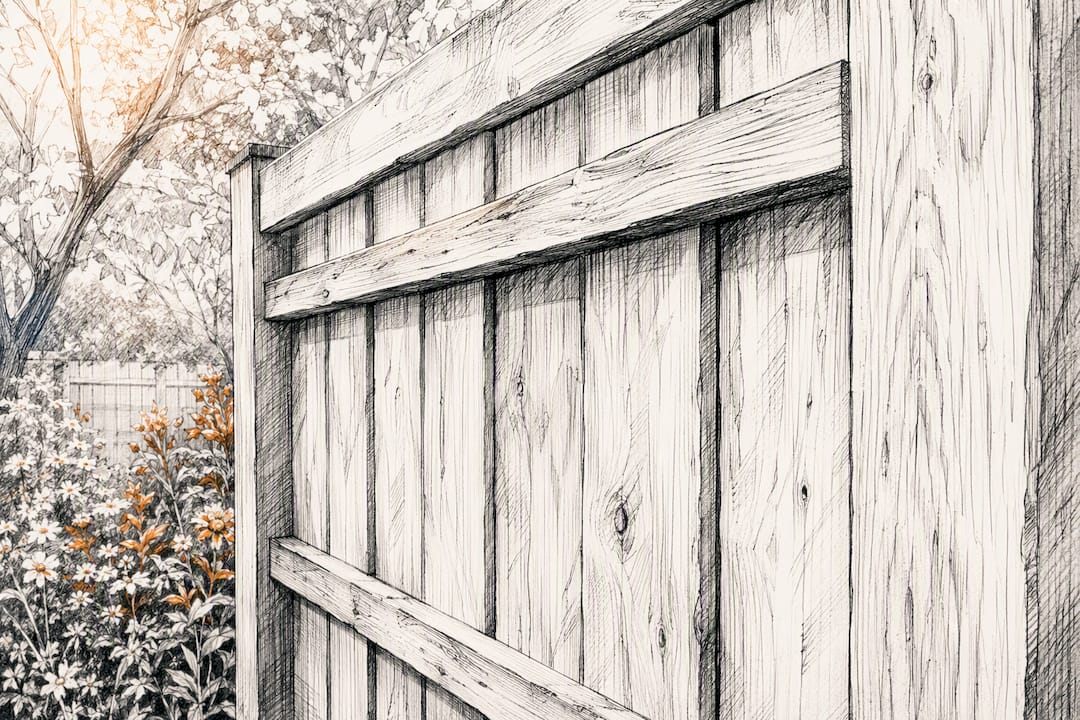
Table of Contents
- Cedar privacy fence styles at a glance
- Side-by-side privacy fence
- Board-on-board fence
- Shadowbox fence
- Horizontal fence
- Horizontal vs. vertical fence: which is better?
- What North Texas weather means for each style
- How to choose the right style for your yard
- FAQ
Cedar Privacy Fence Styles at a Glance
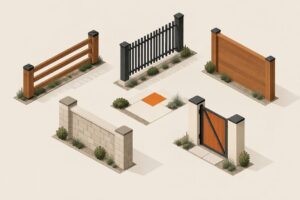
Every style below uses the same basic parts: posts set in the ground, horizontal rails between them, and boards (pickets) attached to the rails. What changes is how the boards are arranged, and that changes privacy, looks, airflow and upkeep.
- Side-by-side: boards butted edge to edge in a single layer. Good privacy at first; small gaps can open as the wood dries.
- Board-on-board: two layers of boards that overlap. Full privacy with no see-through gaps.
- Shadowbox: boards alternate from one side of the rail to the other with space between. Partial privacy, attractive from both sides.
- Horizontal: boards run sideways between posts. Modern look; privacy depends on the gap between boards.
Any of these can be finished with a cap and trim, a flat board across the top and a trim board below it. It’s the detail that makes a standard privacy fence look custom.

Whichever style you choose, the build quality underneath matters as much as the look. Straight posts, solid rails and quality cedar are what keep any privacy fence standing tall through North Texas summers and storms, so ask every contractor how they set posts and attach rails before you compare designs.
Side-by-Side Privacy Fence
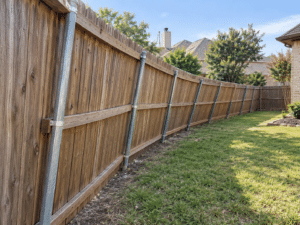
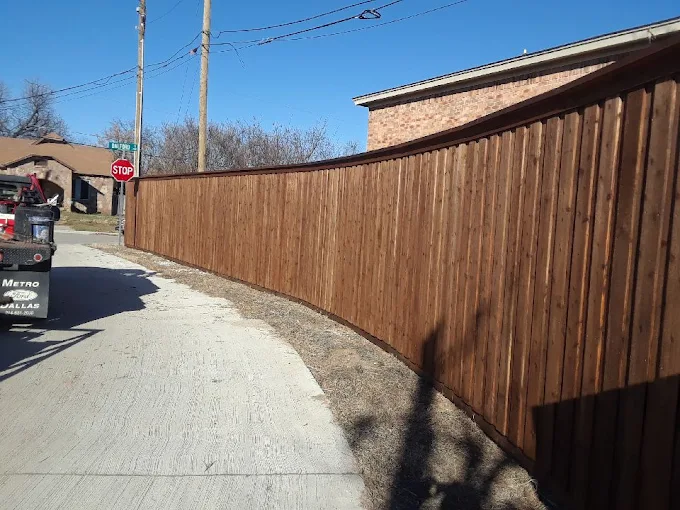
The side-by-side fence is the most common backyard fence in North Texas. Boards are installed tightly next to each other on one side of the rails, giving a clean, flat face toward the neighbor or street.
Pros: a simple, familiar look; uses fewer boards than board-on-board; easy to repair one board at a time.
Cons: cedar shrinks a little as it dries, so thin gaps can appear between boards over time. The rails and posts show on one side, so you’ll want to decide which side faces out.
Best for: homeowners who want a reliable, good-looking privacy fence without extra layers.
Board-on-Board Fence
A board-on-board fence uses two layers. The first layer of boards goes on with planned gaps, then a second layer covers those gaps so each board overlaps its neighbors. When the wood dries and shrinks, the overlap keeps the fence solid.
Pros: the most complete privacy of any wood fence; a rich, textured look; looks good from the street side.
Cons: uses more cedar than side-by-side; a solid face catches more wind, so posts need to be set well; more surface to stain.
Best for: backyards next to busy roads, pools, close neighbors, or two-story homes where full screening matters most. For more ideas, see our privacy fence ideas guide.
Shadowbox Fence
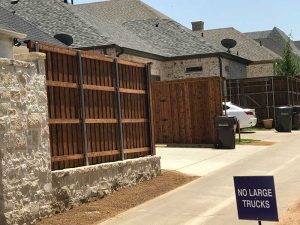
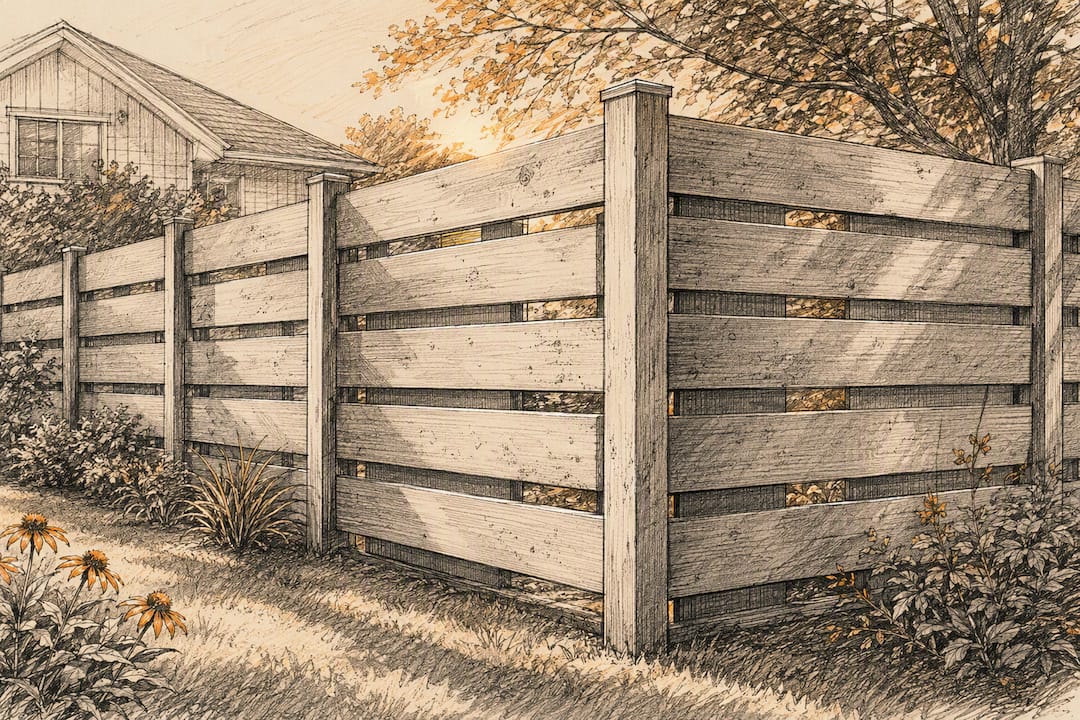
A shadowbox fence (also called a “good neighbor” fence) alternates boards from one side of the rail to the other, with a space between boards on each side. From straight on it looks nearly solid, but from an angle you can see through slightly.
Pros: looks finished from both sides, which neighbors appreciate; air moves through, which reduces wind load; a three-dimensional look that stands out.
Cons: less privacy than board-on-board, especially from an angle.
Best for: shared property lines, open or windy lots, and homeowners who want some privacy with a lighter look.
Board-on-board vs. shadowbox: people often confuse the two. Board-on-board overlaps boards to block every view. Shadowbox alternates boards with space between, so it trades a little privacy for airflow and a two-sided finish.
Horizontal Fence
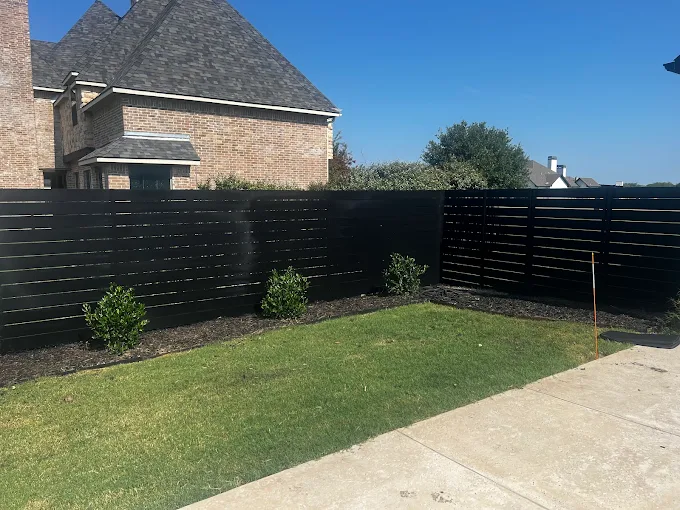
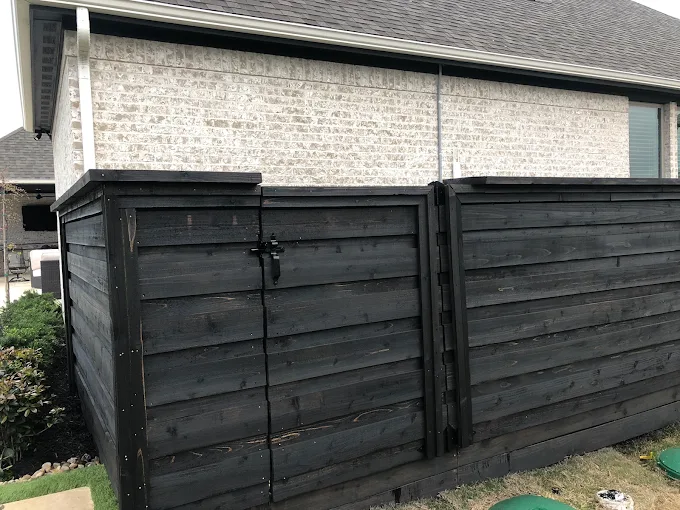
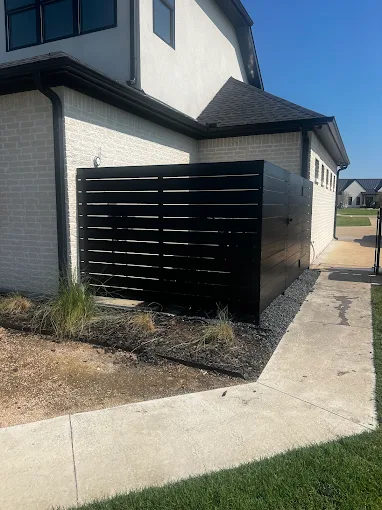
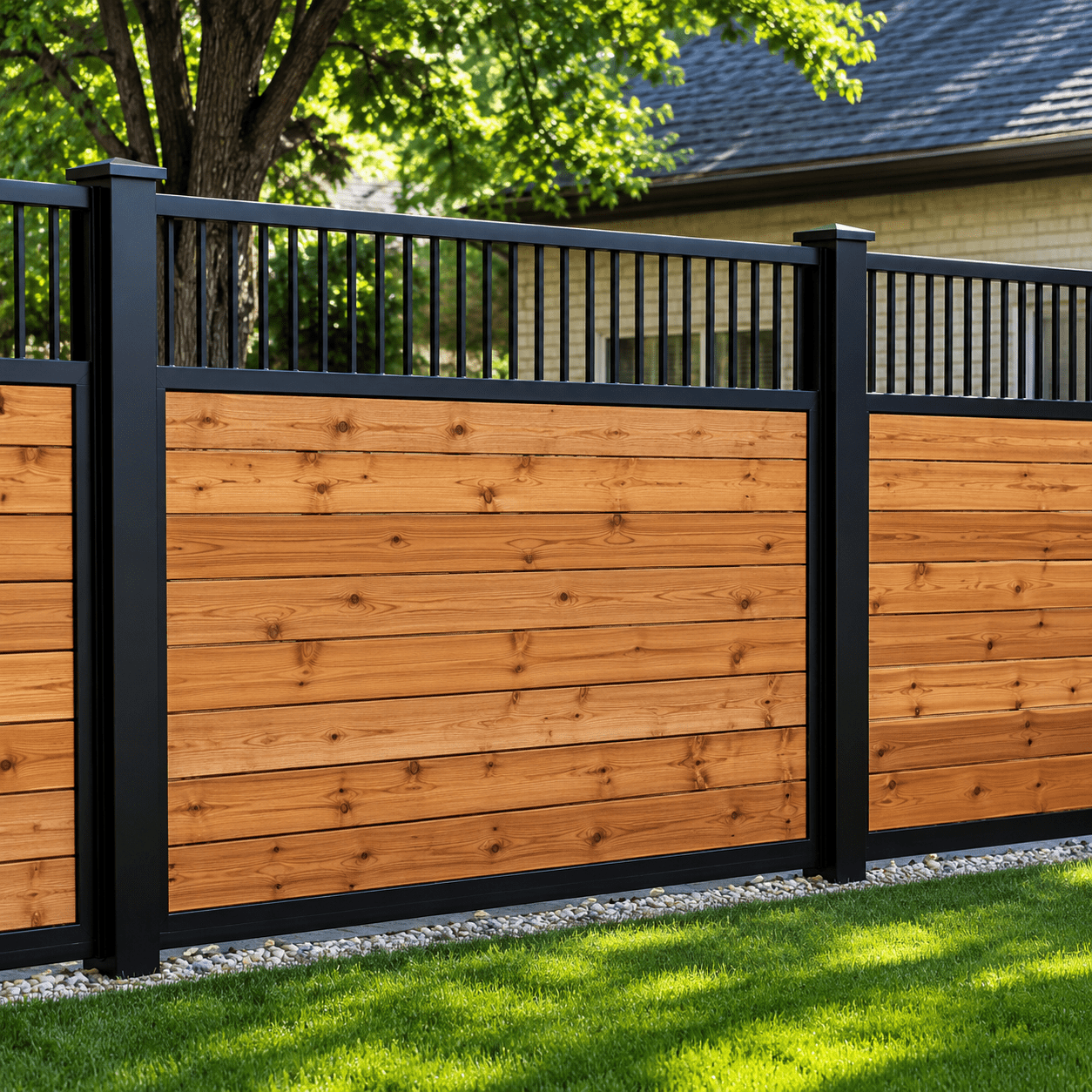
A horizontal fence runs boards sideways between the posts instead of up and down. It’s the go-to choice for modern and contemporary homes, and it pairs well with clean landscaping and outdoor living spaces.
Pros: a sleek, modern look; makes a yard feel wider; privacy can be adjusted with tighter or wider board spacing.
Cons: long horizontal boards need closer post spacing or extra support to stay straight; HOA approval may take more effort in traditional neighborhoods.
Best for: modern homes, pool areas and patios, and anyone who wants their fence to be a design feature.
Horizontal vs. Vertical Fence: Which Is Better?
Neither is better in every case. Here’s how they compare:
- Look: vertical fences read as classic and traditional. Horizontal fences read as modern.
- Privacy: both can be fully private. Vertical board-on-board is the most proven option for complete screening.
- Structure: vertical boards are supported by rails along their whole height. Horizontal boards span from post to post, so the build needs to be designed to keep them from sagging.
- Neighborhood fit: many HOAs are familiar with vertical cedar. Check your guidelines before choosing horizontal. Our HOA approval guide explains how to get started.
What North Texas Weather Means for Each Style
Rockwall County and Collin County fences deal with summer heat, strong spring winds, sudden storms and Blackland Prairie clay that swells when it’s wet and shrinks when it’s dry. That affects each style differently:
- Wind: solid styles like board-on-board and tight side-by-side catch the most wind. Shadowbox and spaced horizontal designs let air through.
- Sun: UV grays cedar over time. Staining protects every style, and the Western Red Cedar Lumber Association’s care guide covers the basics of cedar care; see our guide on wood fence maintenance in North Texas.
- Soil: clay movement is the number-one reason fences lean here. Whatever style you choose, posts set properly in concrete are what keep it straight. If your current fence is already leaning, read why fences lean and how to fix them.
How to Choose the Right Style for Your Yard
- Decide how much privacy you need. Full screening points to board-on-board. Partial privacy with airflow points to shadowbox.
- Match your home. Traditional homes suit vertical cedar. Modern homes suit horizontal.
- Think about your neighbors. On a shared line, shadowbox looks good from both sides.
- Pick your height. Most backyard privacy fences are 6 or 8 feet. Our privacy fence height guide explains the tradeoffs.
- Check HOA guidelines before you commit to a style or color.
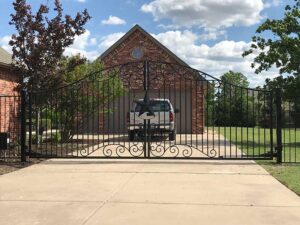
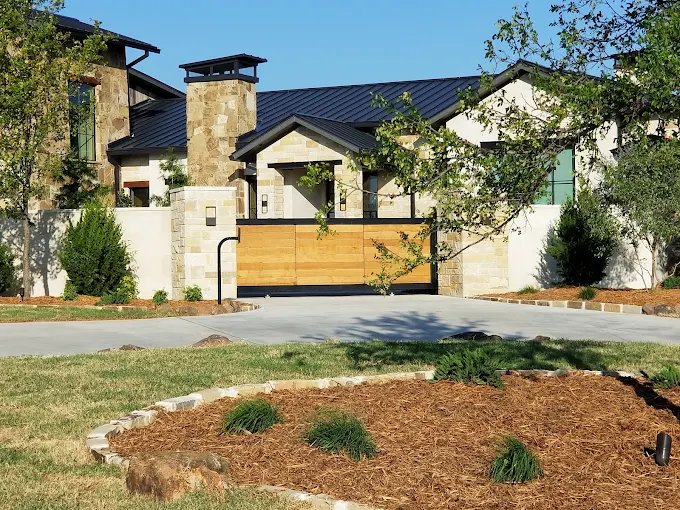
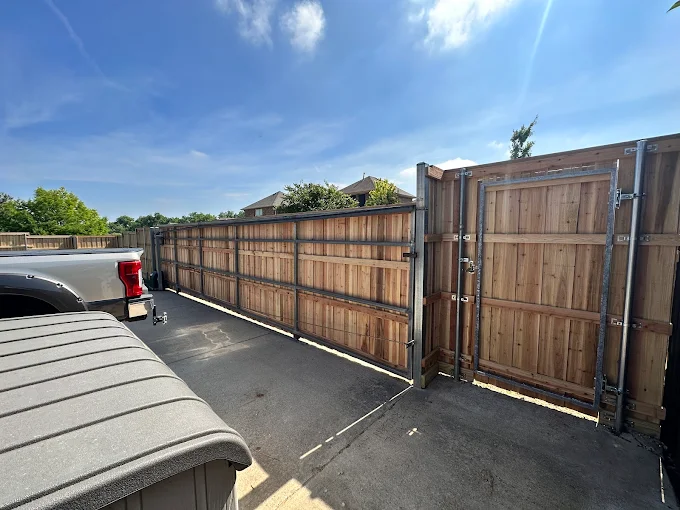
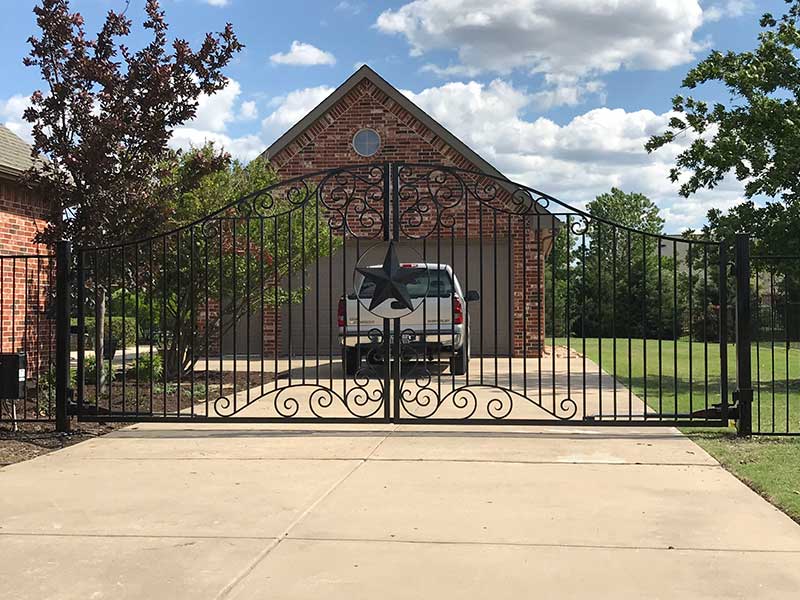
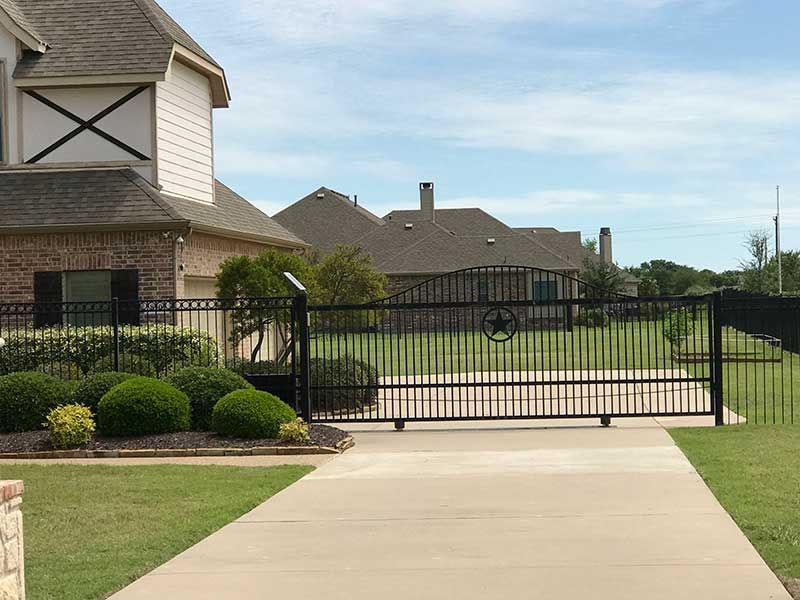
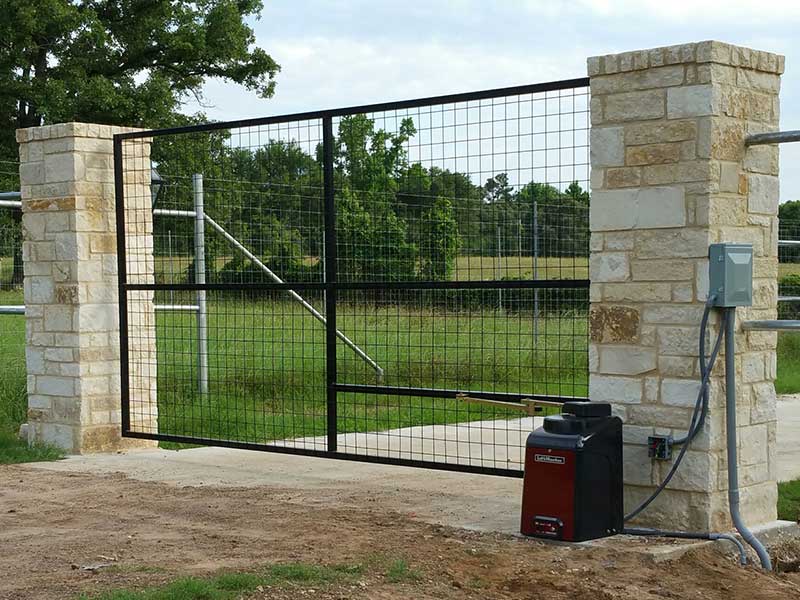
- Plan the gates. Walk gates and driveway gates should match the fence. Easton builds both, including automatic driveway gates.
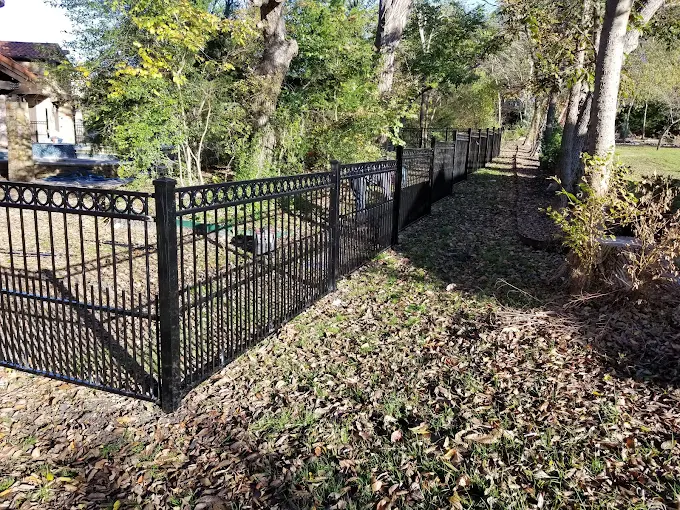
Still deciding between wood and iron? Read cedar vs. iron fences.
Get a Free Cedar Fence Estimate
Easton Fencing has built cedar privacy fences across Rockwall County and Collin County since 2009. Every fence is built by our own in-house crews, fully insured, with no subcontractors. We’ll walk your yard, show you style options and give you a fast, free, no-pressure quote. Learn more about our cedar and wood fence installation, browse our gallery of past work, or request a free estimate.
We build fences in Rockwall, Heath, Fate, Royse City, Parker, Lucas, Fairview, Allen, Plano, McKinney, Prosper, Celina, Anna, Wylie and Sachse.
FAQ
What are the downsides of a board-on-board fence?
A board-on-board fence uses more cedar than a side-by-side fence, has more surface to stain, and its solid face catches more wind. Well-set posts handle the wind load, and regular staining keeps the extra surface protected.
Is a shadowbox fence the same as board-on-board?
No. Board-on-board overlaps boards so there are no gaps at all. Shadowbox alternates boards from one side of the rail to the other with space between them, so it looks finished from both sides and lets air through, but gives slightly less privacy from an angle.
Which wood fence style gives the most privacy?
Board-on-board gives the most complete privacy. The overlapping boards keep the fence solid even as the cedar dries and shrinks.
Is a horizontal fence better than a vertical fence?
It depends on your home and goals. Horizontal fences give a modern look and make a yard feel wider. Vertical fences are classic, widely accepted by HOAs, and the most proven option for full privacy.
Which fence style is best for windy areas?
Shadowbox and spaced horizontal designs let air pass through, so they handle wind well. Solid styles like board-on-board can also stand up to North Texas wind when the posts are set properly in concrete.
Which side of the fence should face my neighbor?
Traditionally, the finished side faces out toward the neighbor or street, with the posts and rails on your side. If you want both sides to look finished, choose a shadowbox or board-on-board style.