
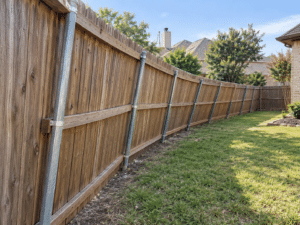
Why Is My Fence Leaning? Causes, Fixes and When to Call a Pro
Fence leaning after a storm or wet season? Learn the 5 common causes in North Texas, how leaning posts are fixed, and when to call a fence
17 years of proven success and experience
Request a FREE Quote and receive a 10% fall discount
A cedar fence is the most popular way to add privacy to a North Texas backyard, and it’s been a core part of Easton Fencing’s work since 2009. We design, build, replace and repair wood fences for homes and businesses across Rockwall County and Collin County.

Wood fencing blocks views, softens noise and turns a backyard into private outdoor living space. Here are the styles we build most often.
The classic North Texas backyard fence, with boards butted tightly together.
Overlapping boards on alternating sides for full privacy with no gaps, even as the wood dries.
Boards alternate sides of the rail, so the fence looks good from both sides and lets some air through.
A clean, modern look that pairs well with contemporary homes.
A finished top rail and trim board that give any privacy fence a custom, high-end look.
Lower front-yard fences that add character and curb appeal.
Most backyard privacy fences are 6 or 8 feet tall. HOA and city rules vary by neighborhood, so we confirm what applies to your address before we build. For more ideas, read our guides to privacy fence ideas and privacy fence height, or compare styles in board-on-board vs. side-by-side vs. shadowbox.
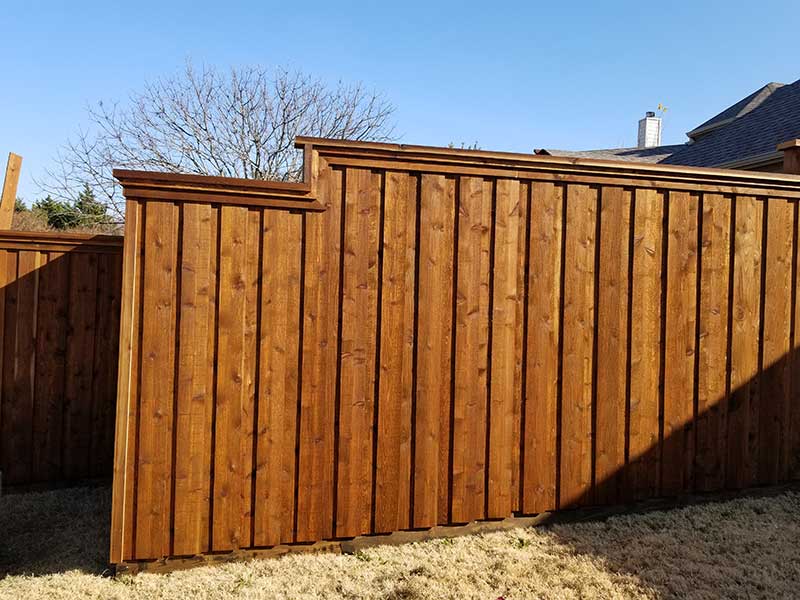
Cedar is our go-to wood because it naturally resists rot and insects, takes stain beautifully and weathers well. North Texas is tough on fences, with summer heat, strong spring winds and Blackland Prairie clay that swells when it’s wet and shrinks when it’s dry. That’s why we build every wood fence around strong, well-set posts — a fence is only as good as what holds it up.
Stain or sealer protects cedar from sun and moisture and keeps its rich color. With periodic re-staining, a cedar fence keeps looking good for years. Our wood fence maintenance guide explains how to care for cedar in North Texas.
Looking for a specific city? See cedar fence installation in Parker, Prosper, Celina, McKinney and Rockwall.
A well-built cedar fence in North Texas typically lasts about 15 to 20 years, while a pine fence usually lasts less. How long yours lasts depends mostly on the posts and on upkeep. Easton Fencing sets posts 30 to 36 inches deep in concrete so they hold in our shifting clay soil, and cleaning and sealing the wood every few years protects it from the Texas sun and moisture.
We measure, talk through style and height, and mark gate locations.
Our crew sets every post in concrete and builds the fence straight and level, stepping it on sloped yards.
We check every board, gate and latch with you.

17 years of experience, in-house crews only, fully insured, and fast, free quotes. Need a fix instead of a new fence? We also handle fence repair for leaning posts, broken boards and storm damage. Comparing materials? Read cedar vs. iron fences.
We build wood fences throughout Rockwall, Heath, Fate and Royse City, plus Parker, Lucas, Fairview, Allen, Plano, McKinney, Prosper, Celina, Anna, Wylie and Sachse.
What our customers think about us and how we do our work!


 Trustindex verifies that the original source of the review is Google.
 Trustindex verifies that the original source of the review is Google.
 Trustindex verifies that the original source of the review is Google.
 Trustindex verifies that the original source of the review is Google.
 Trustindex verifies that the original source of the review is Google.
 Trustindex verifies that the original source of the review is Google.

Here are the cities we serve most often — we’re not limited to these, so call us today!
Please feel free to call me directly so I can give you my attention and answer any questions you may have.
A well-built cedar fence lasts many years. How long depends on how well the posts are set, how much sun and water the fence gets, and how often it’s stained or sealed. Regular staining is the best way to extend its life.
Side-by-side boards sit edge to edge in a single layer. Board-on-board overlaps boards on alternating sides, so you keep full privacy even as the wood dries and shrinks. Board-on-board uses more wood but gives the most complete screening. Both styles are available in 6- and 8-foot heights.
Most backyard privacy fences are 6 or 8 feet tall. Six feet blocks most views, while 8 feet helps on sloped lots or next to two-story homes. HOA and city rules vary, so we confirm what’s allowed for your address.
We recommend it. Stain or sealer protects cedar from sun and moisture, slows graying and helps the fence last longer. New cedar usually needs time to dry out before it takes stain evenly, so ask us about timing during your estimate. Keeping sprinklers off the boards also helps the finish last.
Yes. We either step the panels down the slope in level sections or follow the grade, depending on the slope and the look you want. We’ll recommend the best option during your estimate. Our in-house crews set every post in concrete so the fence stays straight on the slope.
Yes. We replace broken boards, fix leaning or rotted posts and rebuild damaged sections. If the fence is near the end of its life, we’ll tell you honestly whether repair or replacement makes more sense. We work on wood fences no matter who originally built them.
Check out some great news and informational articles.
Fence leaning after a storm or wet season? Learn the 5 common causes in North Texas, how leaning posts are fixed, and when to call a fence
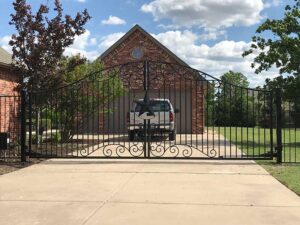
Swing or sliding driveway gate? Compare space, slope, looks, automation and upkeep, plus driveway gate ideas for North Texas homes from Easton Fencing.
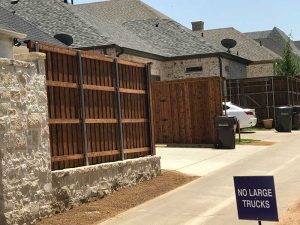
How to maintain a wood fence in North Texas heat, wind and clay soil: inspect, clean, stain, manage water and fix posts early. A seasonal cedar care
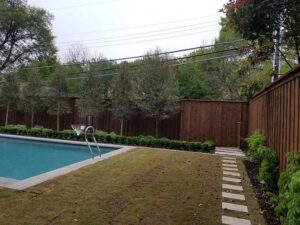
Board-on-board, side-by-side, shadowbox or horizontal? Compare privacy, looks, wind and upkeep for cedar fences in North Texas, from Easton Fencing.
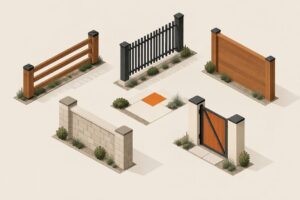
Compare 6 estate fence styles for North Texas homes: iron, cedar, ranch rail, board-on-board and mixed designs. Pick the best fit for privacy or security.

Safety first troubleshooting for homeowners. Follow five safe checks to diagnose driveway gate power, command, sensor, and mechanical faults, and know…